
AI assistants can help marketing agencies do better work by gathering scattered information, accelerating research, improving briefs, checking content and turning campaign data into clearer questions and recommendations. The biggest gains come when agencies connect the right sources, define a specific task and keep experienced people responsible for strategy, accuracy and approval.
That matters because a surprising amount of agency work happens between the actual work: finding the latest brief, checking which numbers are current and reconstructing a decision from three meetings and a document named “FINAL_final_2.” AI can help with that friction. It still needs somebody who knows what a good campaign looks like.
This article uses “ChatGPT dots” to discuss the personal-assistant approach to agency work. Specific capabilities depend on the experience available to a user, their plan and their approved connections. Publicly documented ChatGPT Work features provide a useful reference point: working with files, plugins and tools to prepare briefs, analyses and other deliverables for review. [1]
Why connected AI assistants can improve agency work
A connected AI assistant combines conversational AI with the files, approved apps and tools a team provides. The advantage is context: it can work from a current client brief, research and campaign results rather than guessing what “make this better” means.
For an agency, better work has several practical meanings:
- A recommendation reflects the actual client goal and constraints.
- A writer starts with a useful brief and reliable evidence.
- A strategist spends less time assembling information and more time interpreting it.
- A reviewer can trace important claims back to their sources.
- A project handoff includes a clear owner, decision and next step.
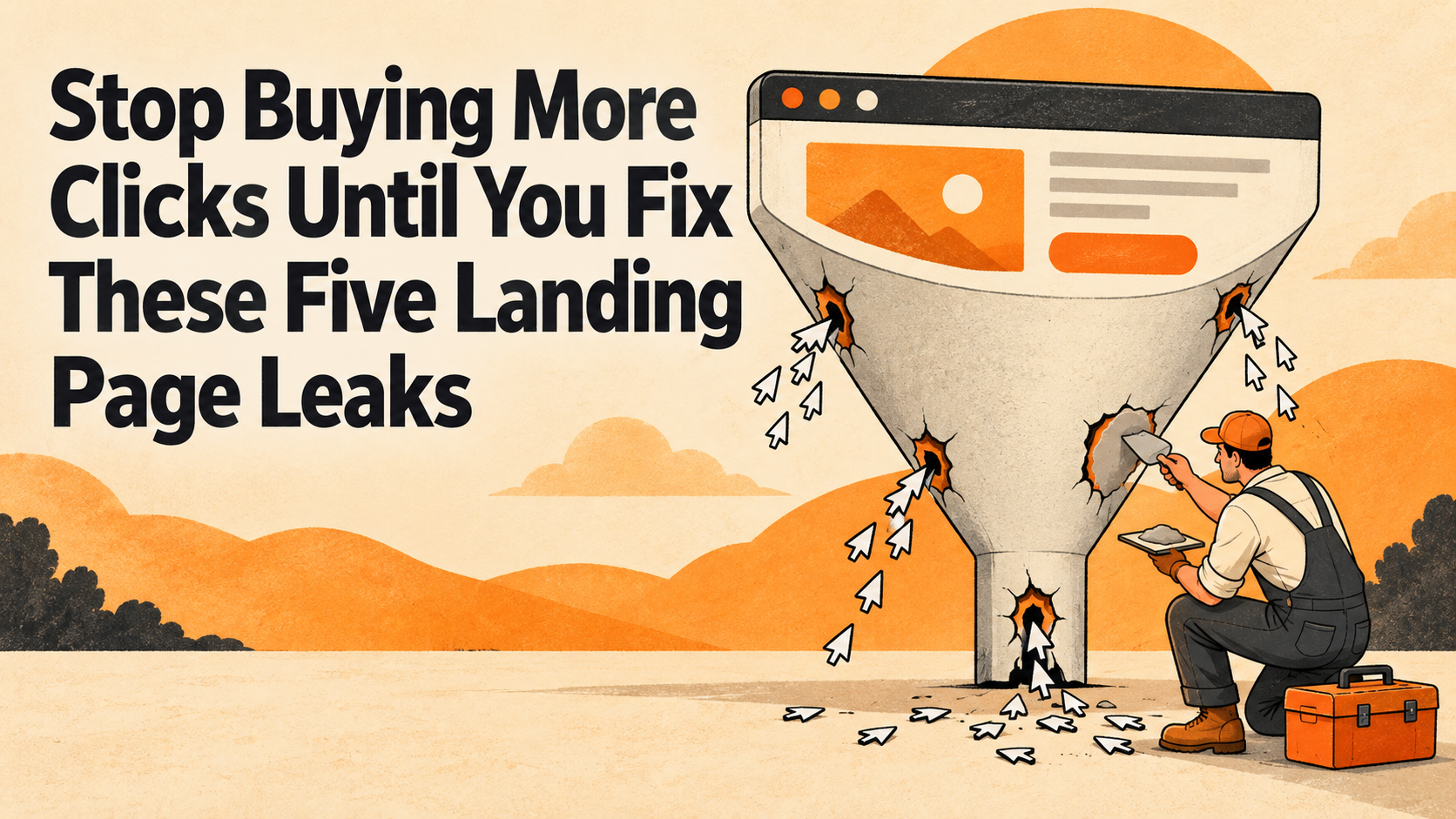
None of those benefits appears automatically when a subscription starts. The agency has to design the workflow around them. Here are five places to begin.
1 Turn scattered research into a useful decision brief
AI research tools can collect and organize information about a market, audience or competitor set. The useful assignment is specific: compare named competitors, use current sources, distinguish product claims from independent evidence and identify what remains unknown.
For example, an agency researching a regional home-services campaign could ask for a comparison of service areas, offers, customer questions and landing-page approaches. The output should link to the source for each finding and flag missing information.
This gives the strategist a faster starting point for positioning and creative decisions. It also exposes gaps that need customer interviews, sales-team input or better data. A competitor page can reveal what a company says; it cannot prove what its customers believe.
Research still needs checking. Google explicitly warns that Gemini can omit sources, cite a document that does not support the information, or invent a source. A citation is a helpful trail, not a certificate of truth. [7]
2 Build stronger briefs before producing more content
A good brief connects the business objective, audience, offer, evidence, brand voice and desired action. A connected assistant can organize those inputs and identify contradictions before the creative team starts.
Suppose the approved brief emphasizes qualified leads, but the draft landing page pushes a broad giveaway. An assistant can flag that mismatch for review. It can also highlight claims without supporting evidence or questions the page never answers.
The human team then decides what to change. That distinction matters: spotting a contradiction is a useful task; deciding which customer problem the brand should own requires judgment.
Give the assistant examples of approved work, the current brief and explicit limits. Ask it to list unresolved questions before drafting. This produces a more useful result than asking for “ten amazing campaign ideas” and receiving ten variations of the word “unlock.”
3 Improve content quality and reuse approved expertise
AI assistants can help turn a reviewed interview, webinar or article into channel-specific drafts. One expert conversation might support a website FAQ, sales email, social post and short video outline.
The quality advantage comes from preserving the original expertise while adapting the presentation. Ask the assistant to retain technical meaning, identify the source passage behind factual claims and flag anything it adds.
A practical review pass can check:
- Does the opening answer the reader's question?
- Are the claims supported and current?
- Does the copy sound like this business?
- Is the next step clear and appropriate?
- Has the draft repeated itself or invented a benefit?
Editors still own the final copy. AI is especially useful for generating alternatives and finding omissions; publishing every alternative is how a content calendar becomes a storage problem.
4 Make reporting more useful than a collection of charts
When given approved exports or authorized reporting access, an assistant can help compare periods, summarize changes and draft questions for an analyst to investigate.
Imagine leads increased while booked appointments fell. A useful report would separate those observations, check whether the definitions and date ranges match, and suggest examining lead quality, follow-up speed and tracking changes. It would avoid announcing a cause before the evidence supports one.
The analyst must verify calculations, attribution settings, missing data and the business meaning of each metric. AI-generated explanations can sound convincing even when a spreadsheet column was misread.
A strong reporting workflow asks for three things: what changed, what evidence supports the explanation and what the team should investigate next. That helps move a client conversation from “Here are your numbers” to a decision about the work.
5 Reduce lost context between meetings and deliverables
Agencies handle many small decisions that can disappear between a call and the next version of a deliverable. An assistant can organize an approved meeting record into decisions, open questions, owners and proposed next steps.
Where the selected product and permissions support it, recurring research or reporting tasks can also help keep information current. ChatGPT Work and Claude Cowork document recurring-task capabilities; setup, access and availability still matter. [1] [2]
The agency should define what gets checked, how often, who reviews the result and when the task should stop. A report that runs every week after a project ends is automation with separation anxiety.
Client communication, publishing and budget changes need their own agreed approval rules. Finding an issue and taking an external action are separate responsibilities.
Which AI tools fit marketing agency workflows
Choose tools against a real assignment and the systems your team already uses. These are practical starting points, not a universal ranking:
- ChatGPT Work: Suitable to evaluate for multi-step work involving files, approved plugins and reviewable deliverables such as briefs or analyses. [1]
- Claude Cowork: Suitable to evaluate for work in selected folders and connected tools, file creation and recurring reports. Availability varies by platform and rollout. [2]
- Gemini Deep Research in Google Workspace: Useful to evaluate when research needs selected Drive, Gmail, Chat and web sources, with a cited report in Google Docs. Eligible plans and access apply. [3]
- Microsoft Copilot Researcher: A relevant option for structured research using accessible Microsoft 365 work content and the web, with citations and existing work permissions. [4]
- Perplexity Pro Search: Useful to evaluate for multi-step web research and source-linked landscape summaries. Verify the original sources before relying on the conclusions. [5]
Test each candidate with the same approved materials and scoring criteria: factual accuracy, source quality, useful output, review time and fit with your team's permissions. The best demo is the one that survives an actual Tuesday.
Protect client information and keep people accountable
Start with a bounded task and the minimum access needed. A read-only research pilot is usually easier to evaluate than handing an assistant broad write access across client systems.
Before connecting tools or uploading information, check client agreements, the chosen plan's data terms, retention settings and the third-party service's policies. Keep client work appropriately separated. Remove unnecessary personal information and never place passwords or API keys in ordinary prompts.
OpenAI's plugin guidance makes an important point: access depends on account permissions, service scopes and action settings. Installing a plugin does not create universal access. [6]
Assign a human owner to each deliverable. Measure time saved after review, error rates, revision cycles and whether the result improved a decision. Faster first drafts are useful, but the final approved work is what the client receives.
What this means for AEO and AI search visibility
AI also affects agencies through customer discovery. People use AI-assisted search to research businesses and compare options. That makes clear, credible website content important alongside the agency's internal AI workflow.
For Google's AI Overviews and AI Mode, Google says established SEO practices remain relevant. Google says no special AI schema or additional technical requirements are needed to appear in these features. Inclusion is not guaranteed. Pages need to be indexed and eligible for search snippets. [8]
Use assistants to identify unanswered customer questions and organize evidence. Then publish accurate, useful content that reflects real expertise. Improving internal production and improving visibility in answer engines are related goals, with different measures of success.
Better tools still need a clear marketing strategy
The strongest use of AI gives experienced people more room to think: better-organized research, clearer briefs, more consistent quality checks and fewer lost details. Clients should feel that improvement in the work, not just hear that their agency bought another tool.
Digital Cheddar's Answer Engine Optimization services help businesses improve how they are understood and discovered in AI-driven search. Start with the customer questions that matter, the evidence behind your answers and a practical plan for measuring progress. [9]
Frequently asked questions
How can ChatGPT dots help a marketing agency
The personal-assistant approach can help organize project context, prepare drafts, research questions and clarify next steps. What a particular assistant can access or do depends on its available tools, connected services and permissions. Review the actual setup before assigning a workflow.
Can AI assistants replace a marketing strategist
AI assistants can support research, analysis and production. A strategist remains responsible for interpreting business priorities, understanding customers, choosing trade-offs and approving recommendations. An accurate summary alone does not establish the right marketing strategy.
Which AI assistant is best for a marketing agency
There is no single best choice for every agency. Compare tools using your actual work, approved data, existing software and review requirements. Evaluate the quality of the finished result and the effort needed to verify it.
Is client data safe to use with AI tools
That depends on the product, plan, settings, connected services and client requirements. Review those conditions before sharing data, limit access, remove unnecessary sensitive information and establish clear approval rules for external actions.
Does using AI to write content improve AEO
Using AI does not itself earn visibility or citations. Assistants can help organize clear answers and check drafts, but content still needs useful expertise, accurate evidence and sound technical foundations. Google does not guarantee inclusion in its AI search features. [8]
Sources
- OpenAI — Get started with ChatGPT Work
- Anthropic — Claude Cowork
- Google Workspace — Use Deep Research
- Microsoft — Researcher agent in Microsoft 365 Copilot
- Perplexity — What is Pro Search
- OpenAI — Apps and connectors
- Google Workspace — Research sources and limitations
- Google Search Central — AI features and your website
- Digital Cheddar — Answer Engine Optimization
Sources checked October 11, 2026. Product availability and features can change.